In many kitchens around the world, bananas are simply seen as a convenient fruit — easy to carry, naturally sweet, and ready to eat without preparation. Yet behind this familiar fruit lies a nutritional profile that quietly interacts with several systems in the body, including the nervous system.
Rather than dramatic claims or quick solutions, bananas offer something more subtle: steady nourishment that may gently support the body's natural balance during periods of physical activity, mental fatigue, or everyday stress.
Bananas are a natural source of vitamin B6, a nutrient involved in the production of several neurotransmitters that influence how the brain communicates with the rest of the body.
These include:
Vitamin B6 helps the body convert certain amino acids into these signaling molecules. While no single food can determine emotional balance, consistent intake of supportive nutrients contributes to the broader nutritional environment that the nervous system relies on.
In this sense, bananas act less like a special remedy and more like a reliable everyday ingredient.
Bananas also contain small amounts of tryptophan, an amino acid involved in the pathway that eventually leads to serotonin production.
Tryptophan works together with carbohydrates. When carbohydrates are consumed, insulin helps guide competing amino acids into muscle tissue, which allows tryptophan to travel more easily to the brain. Once there, it may participate in serotonin synthesis.
Because bananas naturally contain carbohydrates, they provide both elements in a gentle combination — the amino acid itself and the carbohydrates that assist its transport.
This may help explain why simple banana-based snacks are sometimes associated with feelings of comfort or steady energy.
Bananas are also well known for their potassium content, an essential mineral involved in maintaining fluid balance and electrical activity in the body.
Potassium plays a key role in:
The nervous system communicates through tiny electrical signals that travel along nerve cells. Minerals such as potassium help maintain the environment required for these signals to function normally.
This is one reason bananas often appear in discussions about recovery after physical activity. During exercise, the body loses fluids and electrolytes through sweat, and foods containing potassium can help restore part of this balance.
Bananas also contribute dietary fiber, which supports digestive health and may indirectly influence the nervous system through what researchers call the gut–brain axis.
The gut and brain communicate through several pathways, including:
Fiber-rich foods help nourish beneficial gut microbes, which in turn produce compounds that interact with these communication pathways.
In particular, slightly less-ripe bananas contain resistant starch, a type of fiber that acts as fuel for certain gut bacteria. As research continues to explore the relationship between digestion and mental well-being, whole foods rich in fiber are increasingly seen as supportive components of overall balance.
After exercise or during periods of mental fatigue, the body often benefits from foods that combine:
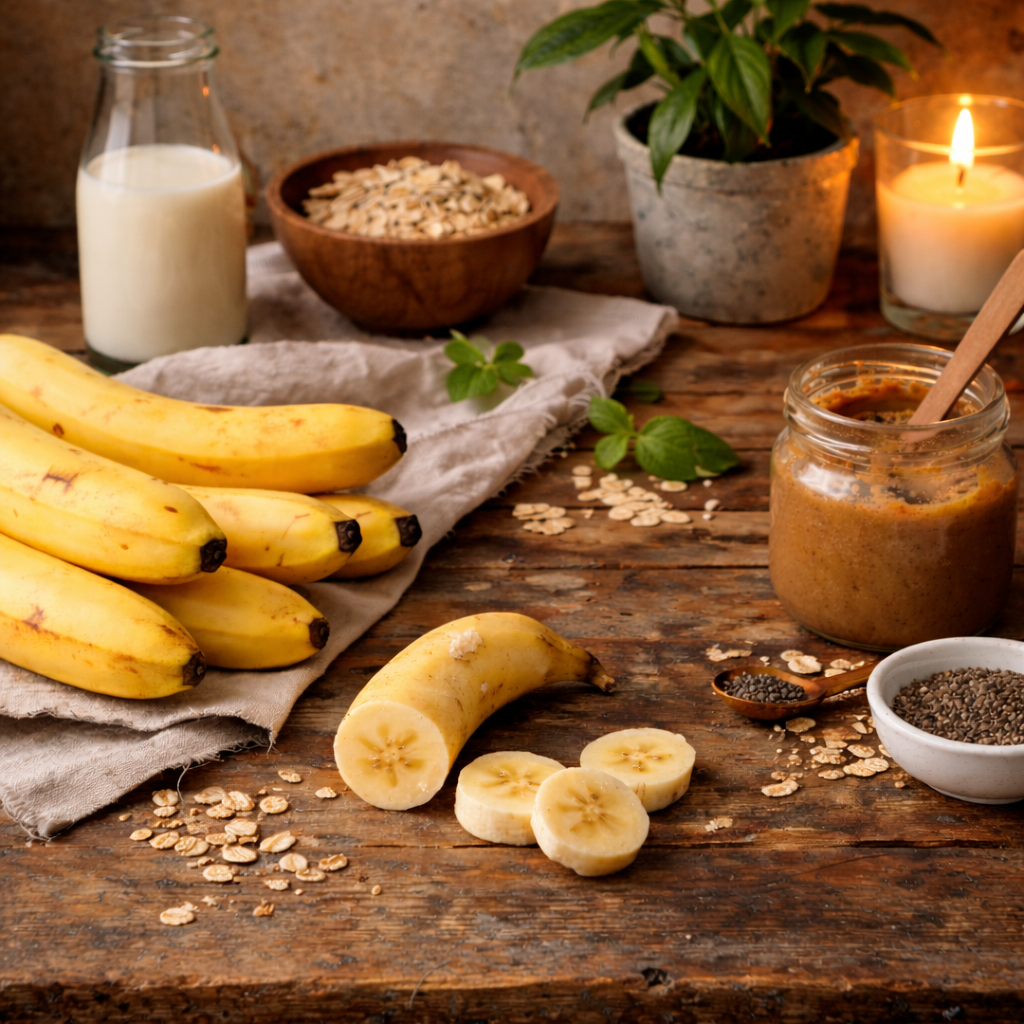
Bananas naturally contain all three in a simple form. When paired with ingredients such as oats, plant milk, or nut butter, they can become part of a balanced plant-based meal that restores steady energy without feeling heavy.
If you’re curious how this works in everyday cooking, you might explore simple dishes such as a recovery bowl made with banana, oats, and seeds.
Nutrition discussions sometimes focus heavily on “superfoods” or dramatic dietary strategies. Yet many traditional foods quietly provide supportive nutrients without needing special labels.
Bananas are one of these ingredients. They are accessible, affordable, and easy to combine with other plant-based foods.
Rather than standing out as something extraordinary, bananas may simply remind us that consistent, simple nourishment can play a role in supporting the body’s natural rhythms.
Bananas remind us that everyday foods can quietly support the body without needing dramatic attention. Sometimes the most helpful ingredients are simply the ones that appear on the table again and again.